
.png?width=1200&height=628&name=COOKIES%20TO%20PIXELS%20WEB%20TRACKING%202024%20(7).png)
Industry
Home Improvement
Challenge
A home improvement company aimed to scale in New England without sacrificing lead quality—but higher spend attracted low-intent leads. Costly product-branded terms (like Everlast Siding and Marvin Windows) added pressure, all while targeting a 3:1 ROAS.
Results
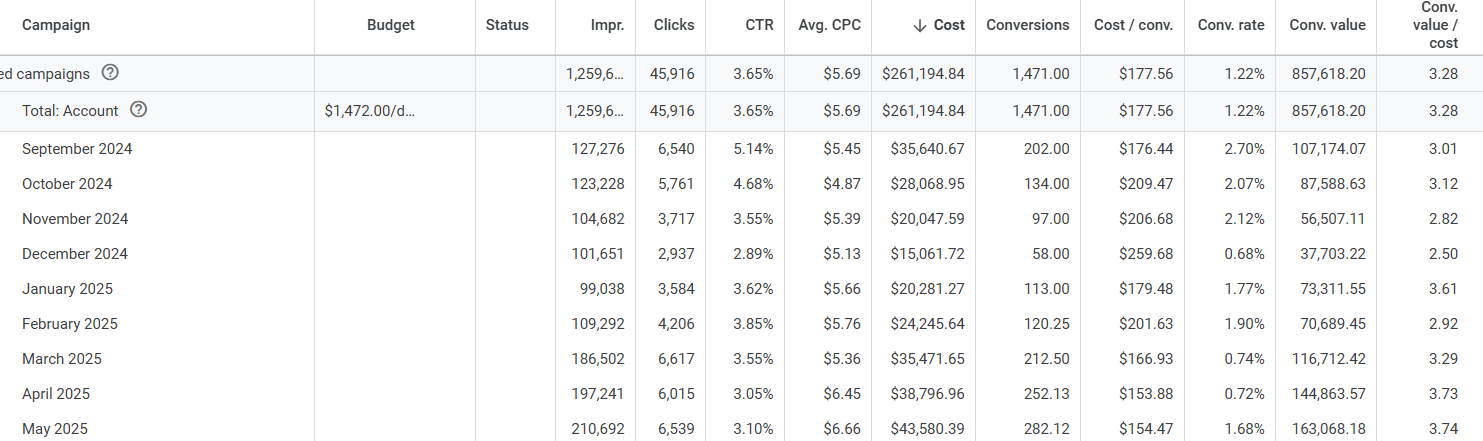
In the final three months, campaigns averaged a 3.25+ ROAS even with peak spend, branded terms delivered up to 7.05 ROAS, and value-based bidding drove more qualified, bottom-funnel leads.
Key Product
Paid Search

About This Business
A New England-based provider of siding, painting, roofing, and window and door installation services serving both B2B and B2C clients, with their PPC efforts focused mainly on the B2C market.The Challenge
A well-established home improvement company wanted to dominate local markets in New England by scaling their lead generation—without compromising on lead quality or profitability. After years of steady success, they hit a familiar wall: when increasing ad spend during peak seasons, their campaigns would drive more leads, but many were early-stage prospects with low closing rates.
They also faced high CPCs for product-branded terms (like Everlast Siding, Marvin, Andersen, and Pella)—products they install but do not manufacture or own. These terms were necessary to attract high-intent searches but drove up costs. Their goal? Sustain a 3:1 ROAS or higher while scaling efficiently, especially during high-demand months.
The Solution
To solve these challenges, a complete campaign restructuring and value-based optimization approach was implemented:
✅ Campaign Segmentation by Intent:
Campaigns were split into brand-specific and non-branded categories, enabling more precise targeting using broad match keywords with brand inclusions. This opened up more auction opportunities and reduced CPCs.
✅ Precision Performance Max (PMax) Builds:
PMax campaigns were crafted with dedicated asset groups per brand and service, using audience signals and first-party data to improve efficiency across Google’s entire ecosystem.
✅ High-Value Customer Match Lists:
Lookalike audiences were refined using historical data from closed deals, giving the bidding algorithm more firepower to chase down high-converting prospects.
✅ Value-Based Conversion Tracking:
Different conversion types (calls, forms, sample requests) were assigned weighted values based on their likelihood to close—putting media dollars where they mattered most.
✅ Full-Funnel Growth Tactics:
In addition to Local Campaigns that supported showroom traffic, high-funnel Demand Gen campaigns were introduced to promote lead magnets like comparison guides, brochure downloads, and sample kit requests. Surprisingly, one such Demand Gen campaign achieved a ROAS of 5.16—remarkable for a high-funnel effort in the home services space. These tactics nurtured users from awareness to conversion across every funnel stage.
The Results
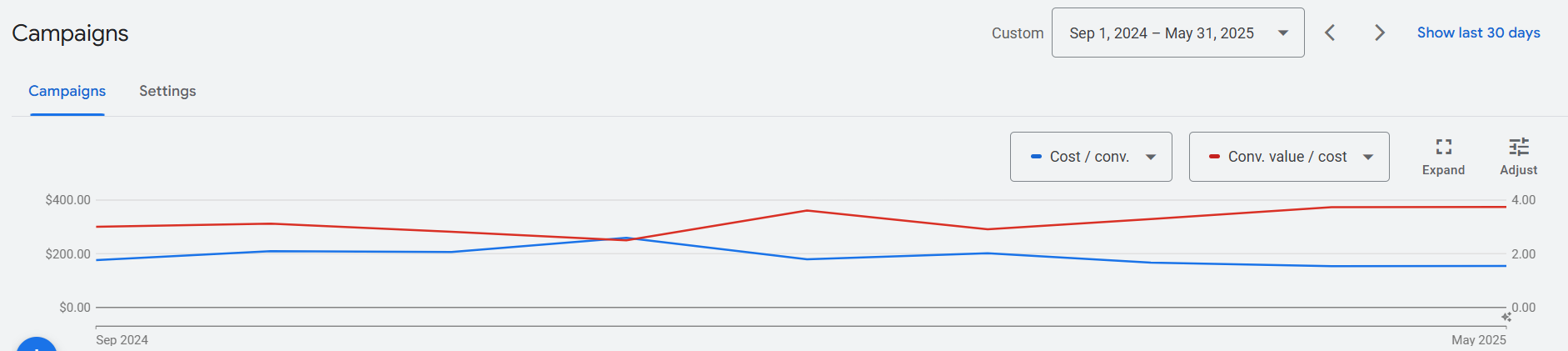
Sustained ROAS Above 3:1
In the final three months of engagement, ROAS averaged 3.25 or higher—despite the highest budget allocation to date.
Branded Campaign Efficiency Soared
Despite high CPCs, branded product campaigns delivered exceptional returns. For example, Performance Max campaigns for window brands achieved ROAS up to 7.05.
Improved Lead Quality, Higher Closing Rates
By prioritizing value-based bidding and bottom-funnel actions, the client saw more high-quality leads—even at scale.
Ready to Get Started?
